
How to Reduce Plastic in Your Bathroom: A Room-by-Room Swap Guide
Open the cabinet under your bathroom sink and count the plastic. Shampoo bottles, conditioner bottles, a body wash pump, a toothbrush, a razor, a tube of toothpaste, cotton swabs with plastic stems. The bathroom is quietly one of the most plastic-heavy rooms in the house, and almost all of it gets used up and thrown out on a regular cycle. If you've been wondering how to reduce plastic in your bathroom without gutting the whole room in one weekend, the good news is you don't have to. You replace things one at a time, as you run out, with versions that don't leave a plastic bottle behind.
This guide walks through the bathroom swap by swap, from the easiest changes to the ones that take a little more getting used to. Pick the one that matches whatever you're about to run out of next.
How Do You Reduce Plastic in the Bathroom?
The simplest way to reduce plastic in your bathroom is to replace single-use plastic items with refillable or package-free versions as you finish what you already own. You don't throw out full bottles - that's just creating different waste. You wait until something runs low, then swap it for a solid bar, a bamboo handle, or a refillable option instead of buying another plastic bottle.
The reason the bathroom matters so much: the average person tosses a surprising amount of plastic from this one room every year. A typical household goes through 8 to 10 shampoo and conditioner bottles, dozens of disposable razors or cartridges, and a toothbrush every few months. Most of it is not recycled. Plastic bathroom bottles are often the wrong type of plastic for curbside programs, or they still have product residue, so they get sorted straight to landfill.
Here's the order most people find easiest, from least disruptive to most:
- Start with what you replace most often - usually shampoo, soap, or your toothbrush.
- Then tackle the daily-use items - toothpaste, deodorant, razors.
- Finish with the occasional buys - cotton swabs, floss, and small accessories.
The Bathroom Plastic Swaps, From Easiest to Hardest
Below is a practical breakdown of the most common bathroom plastic items and what you can swap them for. None of these require changing your daily routine in any meaningful way - they just change what your products are made of and how they're packaged.
| Plastic Item | Plastic-Free Swap | How Easy Is the Switch? |
|---|---|---|
| Shampoo bottle | Shampoo bar | Easy - a few washes to learn technique |
| Body wash pump | Natural soap bar | Very easy - no learning curve |
| Plastic toothbrush | Bamboo toothbrush | Very easy - feels almost identical |
| Conditioner bottle | Conditioner bar | Easy - apply mid-length to ends |
| Toothpaste tube | Toothpaste tablets | Moderate - different texture at first |
| Disposable razor | Safety razor | Moderate - slower, lasts years |
| Cotton swabs | Bamboo cotton swabs | Very easy - identical use |
| Plastic floss | Silk or refillable floss | Easy - same routine |
The first three rows are where most people start, because they replace the items you buy and toss most often. Let's look at those.
The Three Swaps That Make the Biggest Dent
If you only change three things in your bathroom, make it these. They cover the highest-frequency plastic items and they're the easiest to live with.
1. Swap shampoo bottles for a shampoo bar. Bottled shampoo is mostly water - usually 70 to 80 percent - packaged in plastic that rarely gets recycled. A shampoo bar is the concentrated cleansing ingredients with the water left out, wrapped in paper instead of plastic. One bar lasts the equivalent of two to three bottles, so you're cutting both the plastic and the cost. There's a short adjustment of a few washes while you learn to swipe the bar along damp hair and work the lather in with your fingers, and after about a week it feels completely normal.
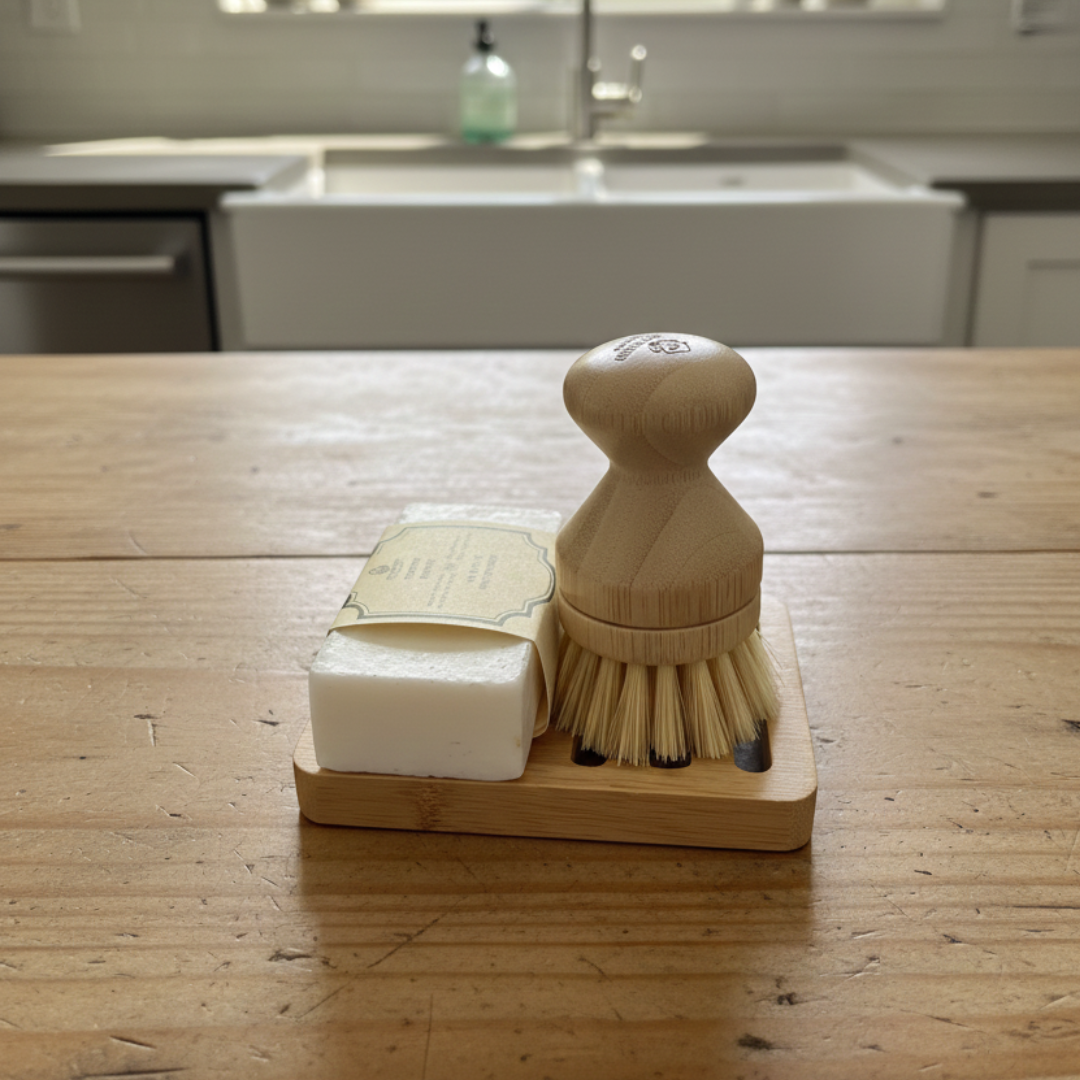
2. Replace body wash with a natural soap bar. This one has no learning curve at all. A natural soap bar does exactly what body wash does, lasts longer than a bottle, and comes with little or no packaging. Plant-based bars made with simple ingredients are gentler on skin than many sudsy body washes, which often rely on harsh detergents. Set it on a draining dish so it dries between uses and it'll last even longer.
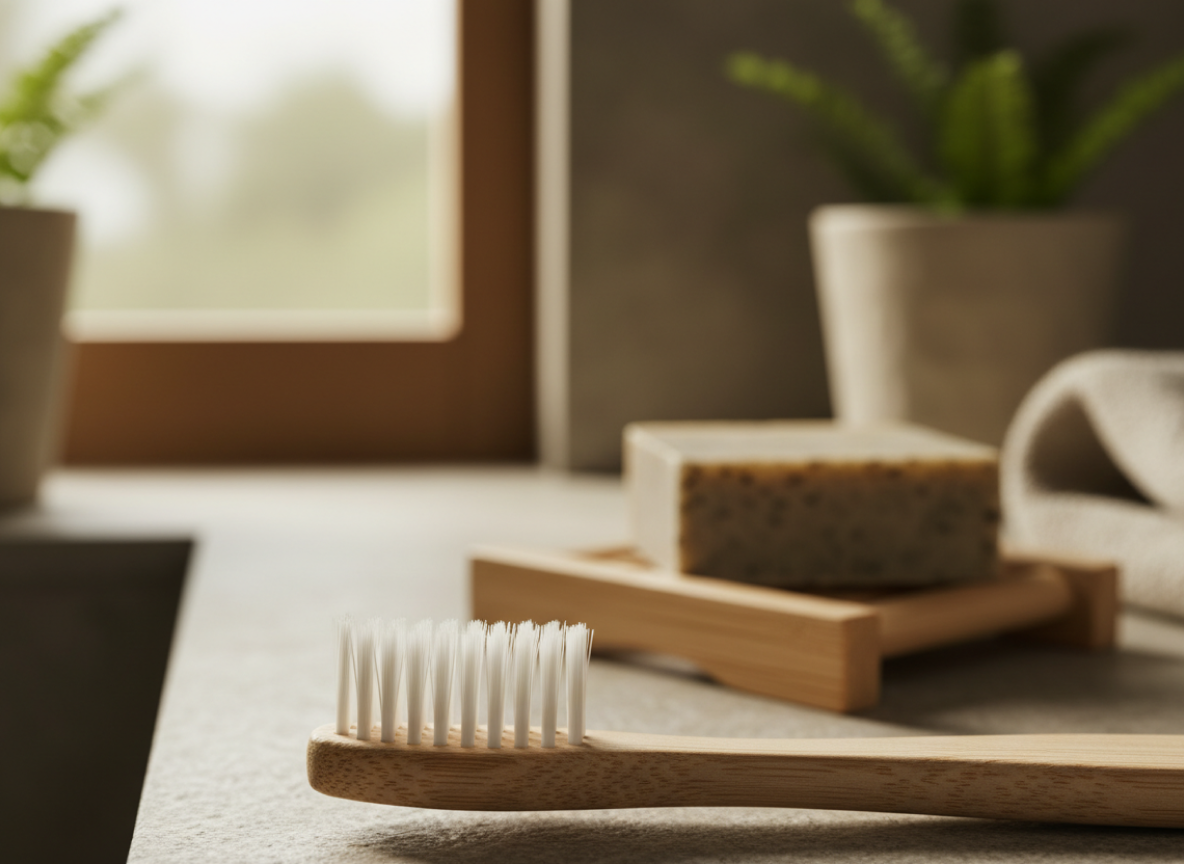
3. Switch to a bamboo toothbrush. Around 4.7 billion plastic toothbrushes are thrown away worldwide every year, and because they're made of mixed plastics, virtually none of them get recycled. A bamboo toothbrush brushes exactly like a plastic one - the handle is the only thing that changes. Bamboo is naturally antimicrobial and the handle is compostable at end of life. You replace it on the same schedule a dentist recommends for any toothbrush, every three months, but without the plastic.
These three alone can eliminate roughly 10 to 15 plastic items from your bathroom waste every year, without asking you to do anything differently in the shower or at the sink.
What About the Trickier Swaps?
Some bathroom items take a bit more adjustment, and it's worth being honest about which ones. Toothpaste tablets, for example, work well but feel strange the first few times - you chew the tablet, then brush, and the foam is lighter than paste. Most people get used to it within a week. Safety razors give a closer shave and a single blade costs pennies, but they're heavier and you shave more slowly at first to avoid nicks.
Here's the key thing: you don't have to do these to make real progress. Plenty of people swap their shampoo, soap, and toothbrush, then stop there and still cut most of their bathroom plastic. Reducing plastic in your bathroom is not all-or-nothing. The swaps you keep are the ones worth making, and a half-plastic-free bathroom is still a huge improvement over a fully plastic one.
If you do want to keep going, the easy add-ons are bamboo cotton swabs (identical to plastic ones, just a paper stem) and a conditioner bar to finish off the hair routine plastic-free. A conditioner bar pairs naturally with the shampoo bar - swipe it from the mid-lengths to the ends, never the scalp, and rinse well.
A Simple Order to Follow
If you want a no-overwhelm plan, here it is in five steps:
- Next time your shampoo runs low, replace it with a shampoo bar instead of buying another bottle.
- When your body wash is nearly empty, switch to a natural soap bar.
- At your next three-month toothbrush change, pick up a bamboo toothbrush.
- Once those feel normal, add a conditioner bar and bamboo cotton swabs.
- If you're keen, try toothpaste tablets and a safety razor last - they take the most adjustment.
Spread over a few months, you barely notice the transition. You're just buying the plastic-free version of things you were going to buy anyway.
As a Canadian zero-waste brand based in Calgary, we've found this is how plastic-free bathrooms actually happen - not in a single dramatic purge, but one empty bottle at a time, replaced with something that works just as well and doesn't end up in a landfill.
Frequently Asked Questions
How do I reduce plastic in my bathroom on a budget?
Start with swaps that save money over time, like shampoo bars and natural soap bars, which both last longer than the bottled versions they replace. Don't throw out products you already own - wait until they run out, then buy the plastic-free version instead. Spreading the swaps over a few months keeps the upfront cost low and most of the bars cost the same or less per use than what they replace.
What is the easiest bathroom plastic swap to start with?
A natural soap bar or a bamboo toothbrush are the easiest, because they require no change to your routine at all. A soap bar is used exactly like body wash, and a bamboo toothbrush brushes identically to a plastic one. Shampoo bars are a close third, with just a few washes of adjustment to learn the technique.
Do plastic-free bathroom products actually work as well?
In most cases, yes. Shampoo and soap bars clean just as well as their bottled versions and often last longer. Bamboo toothbrushes clean teeth exactly like plastic ones. The main adjustment is a short habit change for a couple of items, not a drop in how well they perform.
Are bamboo toothbrushes hygienic?
Yes. Bamboo is naturally antimicrobial, which helps resist bacteria and mould between uses. Store it upright in a holder so the bristles air-dry, just as you would a plastic toothbrush, and replace it every three months. The handle can be composted once you remove the bristles.
How much plastic can I realistically cut from my bathroom?
Swapping just shampoo, body wash, and your toothbrush can eliminate roughly 10 to 15 plastic items per person per year. Add conditioner bars, bamboo cotton swabs, and refillable floss and a typical person can take their bathroom close to plastic-free without much extra effort.
The Bottom Line
You don't need a perfect, fully plastic-free bathroom to make a real difference. You need to stop buying the plastic version of things you already use every day. Start with the next bottle that runs out, swap it for a bar or a bamboo handle, and let the rest follow at your own pace.
Ready to start? Browse our plastic-free bathroom collection and pick the one swap you're closest to needing - your future cabinet will look a lot emptier of plastic.