Why Your Kitchen Sponge Smells (And Why Cellulose Is the Solution)
Most people don’t notice their kitchen sponge until it smells. At first it’s subtle, then suddenly the sink has an odor that doesn’t make sense given how often dishes are washed. The instinct is usually to rinse it harder, microwave it, or throw it away and grab a new one.
The issue isn’t poor hygiene. It’s how most sponges are designed.
Why kitchen sponges smell so bad
A sponge smells because it traps moisture, food particles, and bacteria in a warm environment. That combination creates ideal conditions for odor-causing microbes to grow.
Synthetic sponges are especially good at this. Their dense structure holds onto water long after you think it’s dry. Even when the surface feels dry, moisture remains deep inside.
Over time, bacteria multiply. That’s when the smell appears.
Why rinsing and microwaving only works temporarily
Rinsing removes visible debris, but it doesn’t solve the core issue: moisture retention. Microwaving can kill some bacteria, but it doesn’t change how the sponge holds water.
As soon as the sponge is used again, it becomes damp and the same cycle starts over. That’s why smells keep coming back.
The material problem most people don’t think about
Not all sponges behave the same way. The material determines how quickly a sponge dries.
Synthetic sponges are designed to be soft and durable, but they don’t allow air to move through easily. Moisture stays trapped.
Cellulose sponges behave differently.
Why cellulose sponges smell less
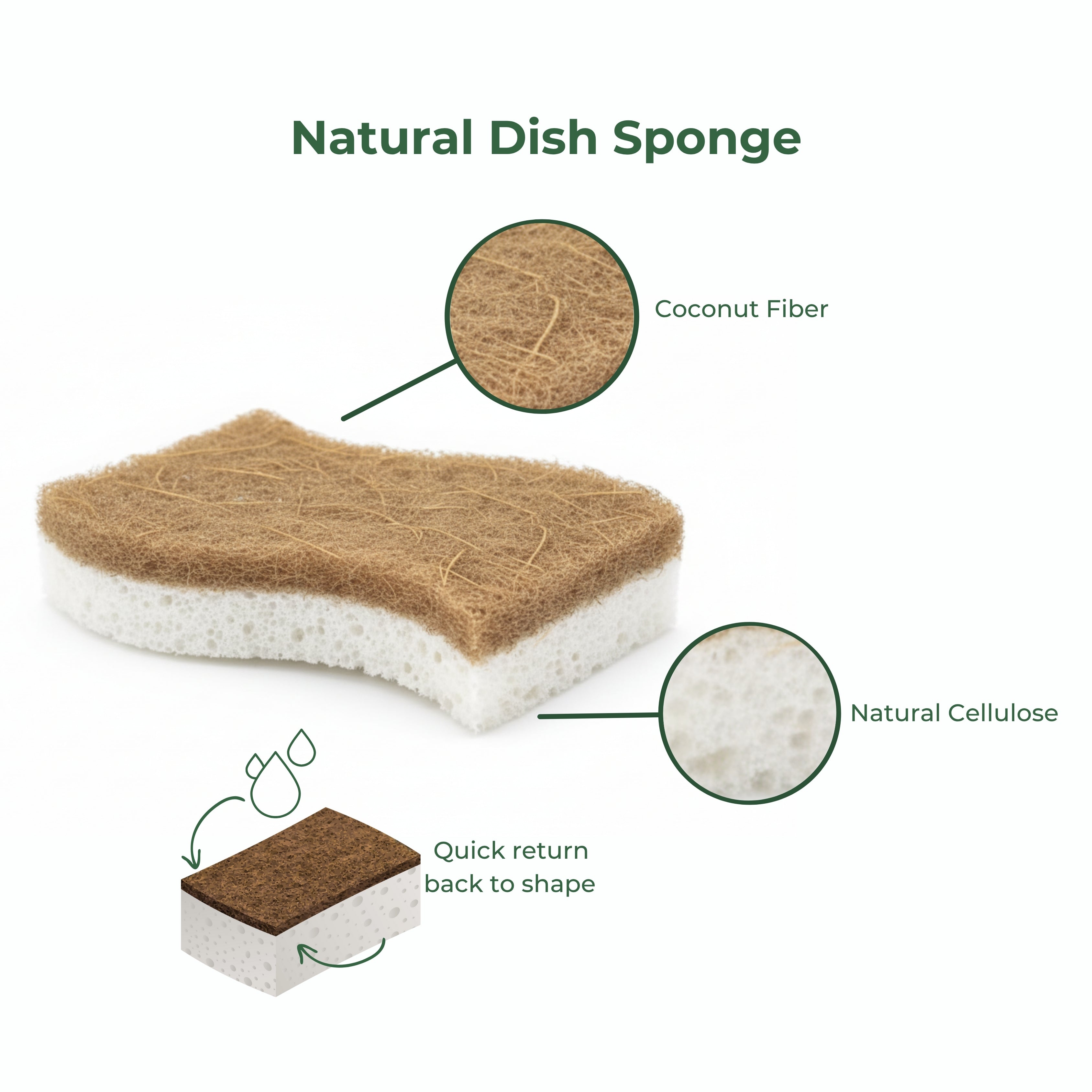
Cellulose is a plant-based material that allows water to move through it and evaporate faster. Because it dries more quickly, bacteria have less time to grow.
This faster drying is the key difference. It doesn’t make a sponge sterile, but it dramatically reduces the conditions that cause odor in the first place.
If you’re tired of replacing sponges because they start to smell, Natural Cellulose Scrub Sponges are designed to air out quickly and stay fresher longer:
https://www.ecohavenmarket.com/products/natural-cellulose-scrub-sponges-2-pack-plastic-free-cleaning-made-easy
Drying matters more than disinfecting
The biggest factor in sponge hygiene isn’t how often you disinfect it. It’s how well it dries between uses.
A sponge that dries fully each time will almost always smell better than one that stays damp, even if the damp sponge is cleaned aggressively.
Cellulose supports this naturally because of its structure.
How to store a sponge so it actually dries
Regardless of material, a few habits make a big difference:
-
Squeeze out excess water after each use
-
Store the sponge where air can circulate
-
Avoid leaving it flat in the bottom of the sink
Giving your sponge airflow matters as much as what it’s made from. A raised surface that lets water drain away, like a Bamboo Soap Dish, helps sponges dry faster and last longer:
https://www.ecohavenmarket.com/products/bamboo-soap-dish-extend-the-life-of-your-bar-soaps
This isn’t about adding steps. It’s about smarter placement.
Why people keep replacing sponges so often
Most people replace sponges frequently because smell gets mistaken for wear. In many cases, the sponge still works. It just hasn’t had a chance to dry properly.
Using a faster-drying material and storing it well reduces how often you reach that point.
Is cellulose the right choice?
If odor, hygiene, and frequent replacement are recurring issues, cellulose sponges are usually the better option. They dry faster, smell less, and require less intervention.
They don’t demand new routines. They simply solve the underlying problem more effectively.
Why this small change tends to stick
Once people switch to a sponge that doesn’t smell after a few days, it’s hard to go back. The sink feels cleaner. There’s less second-guessing. And replacements become less frequent.
It’s a small change that removes a quiet, recurring annoyance from daily life. That’s usually why it sticks.