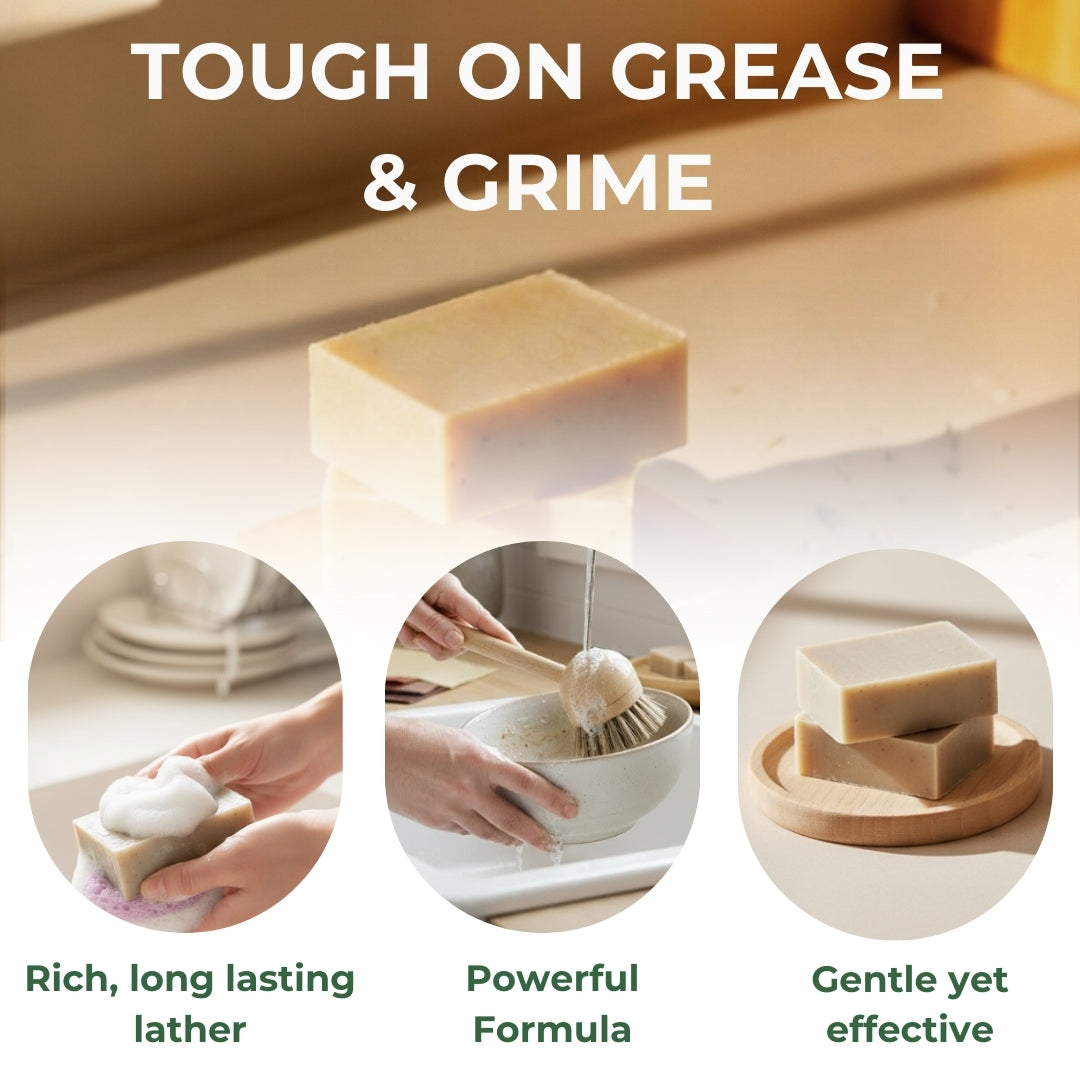
Dish Soap Bars vs. Liquid: Can a Solid Bar Really Clean Your Greasiest Pans?
Dish soap bars tend to trigger the same reaction from most people: curiosity mixed with doubt. The idea sounds nice in theory, but when you’re staring at a pan coated in oil or baked-on food, it’s hard to believe a solid bar can compete with a squeeze bottle of liquid soap.
That skepticism is fair. Most of us grew up equating “liquid” with “stronger.” But when you look more closely at how dish soap actually works, the comparison starts to shift.
Why liquid dish soap feels like the default
Liquid dish soap is familiar and convenient. You squeeze, it foams, and the grease lifts. Because it’s been the standard for decades, it feels like the only format that could possibly work.
What’s less obvious is that liquid dish soap is mostly water. The cleaning power comes from surfactants, but they’re diluted so the product can pour easily and stay shelf-stable. The plastic bottle, pump, and shipping weight all exist to support that diluted format.
It works, but it isn’t especially efficient.
What a dish soap bar actually is
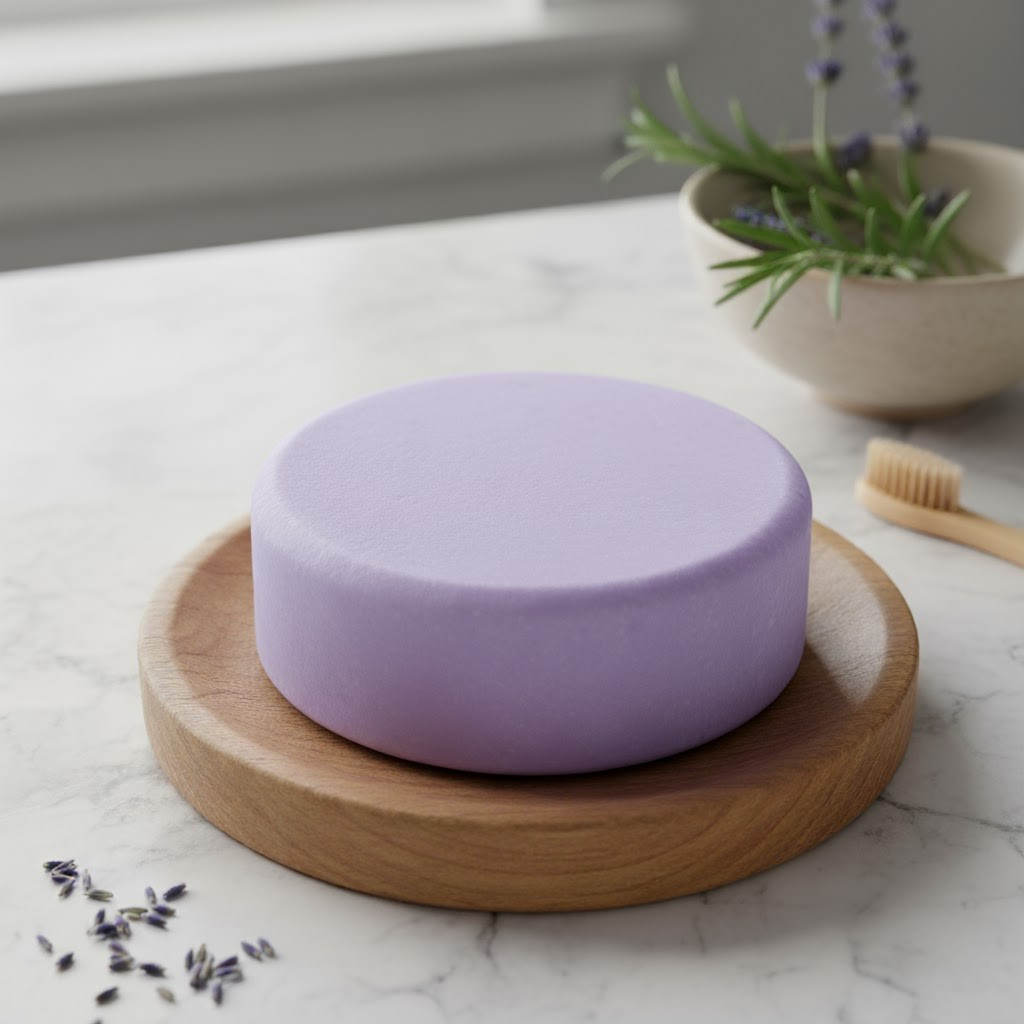
A dish soap bar contains the same core cleaning agents as liquid soap, just without the added water. It’s a concentrated solid cleanser designed to break down grease and food residue when activated with water.
Because it’s concentrated, you’re using the active ingredients directly instead of paying for dilution.
A good example of this format is Eco Haven’s Zero-Waste Solid Dish Soap Bar (Lemon & Vegan), which’s designed specifically for cutting through grease without relying on excess foam:
https://www.ecohavenmarket.com/products/zero-waste-solid-dish-soap-bar-lemon-vegan
The grease question everyone asks
The biggest concern is grease. Oil-heavy pans. Sticky residue. Food that’s cooled and hardened.
A dish soap bar tackles grease the same way liquid soap does: surfactants bind to oil molecules so they can be rinsed away with water. The difference is how the soap gets applied.
Instead of squeezing soap onto a sponge, you rub a damp brush or sponge directly onto the bar. That friction loads the soap exactly where it’s needed. When you scrub the pan, the grease lifts just as effectively—and sometimes faster because the soap isn’t further diluted before contact.
Why scrubbing tools matter more with bars
Dish soap bars work best when paired with a firm scrubbing tool. A brush allows you to control both pressure and soap pickup, which is especially useful for baked-on food.
A bamboo dish brush with natural bristles, like this Bamboo Dish Brush with Sisal Bristles, gives you enough grip and stiffness to do the job efficiently:
https://www.ecohavenmarket.com/products/bamboo-dish-brush-with-sisal-bristles-zero-waste-cleaning
For heavier cookware, a long-handle option offers better leverage and reach:
https://www.ecohavenmarket.com/products/long-handle-bamboo-scrub-brush-heavy-duty-cleaning-power
Once people adjust to this method, cleaning doesn’t feel slower—it just feels more controlled.
How long a dish soap bar actually lasts
Longevity is where the comparison really changes.
A single dish soap bar can replace multiple bottles of liquid dish soap, depending on usage. Because you’re loading only what you need, it wears down gradually instead of disappearing invisibly.
Liquid soap encourages overuse. A bar makes consumption visible, which naturally reduces waste.
Storage makes or breaks the experience
Like any solid bar, a dish soap bar lasts longest when it’s allowed to dry fully between uses. Left sitting in water, it softens and wears down faster. Kept dry, it stays firm and effective for much longer.
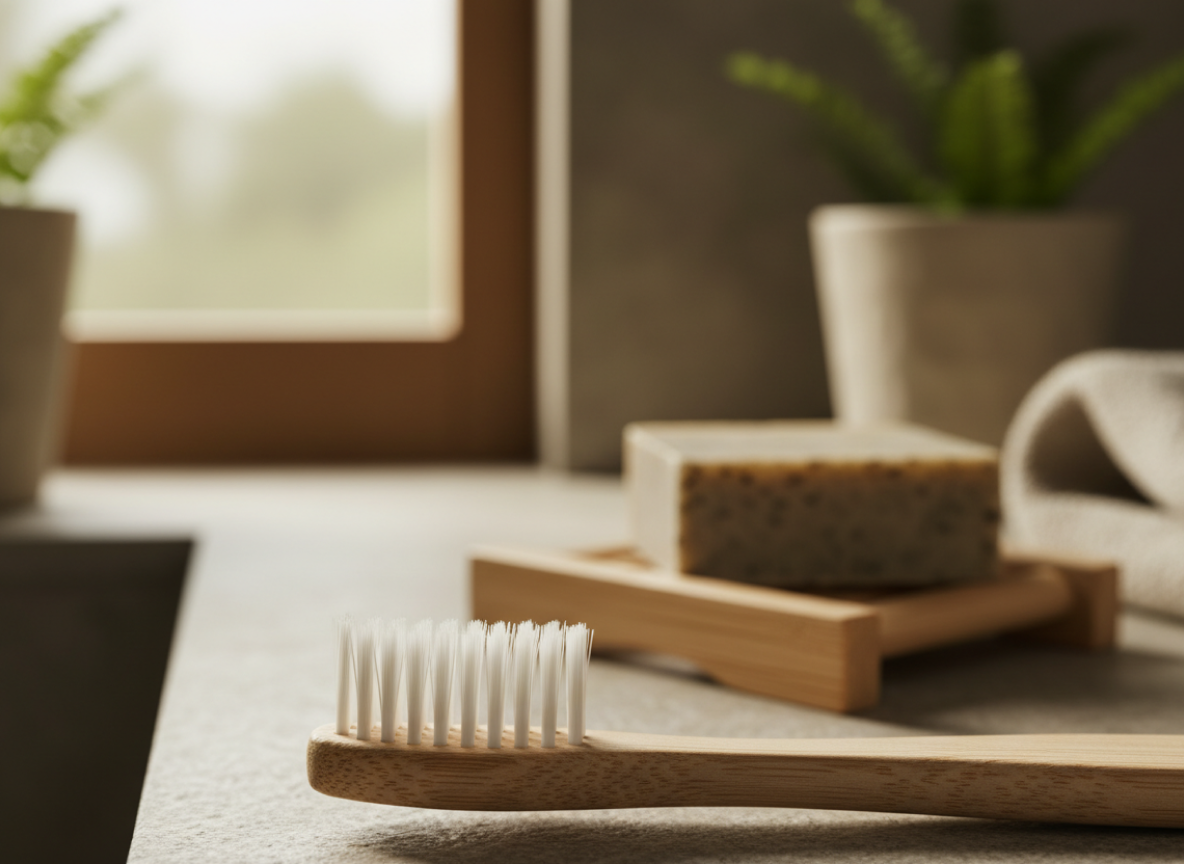
A simple raised soap dish that allows airflow underneath—such as this Bamboo Soap Dish—makes a noticeable difference in lifespan:
https://www.ecohavenmarket.com/products/bamboo-soap-dish-extend-the-life-of-your-bar-soaps
This isn’t an extra step. It’s just thoughtful placement.
The mess factor (and why it’s usually less)
People often assume bars will be messier than liquid soap. In practice, it’s often the opposite.
Liquid soap drips. Bottles get sticky. Caps clog. A dish soap bar stays in one place. You load your brush, clean, rinse, and put the brush back.
Once the habit forms, the sink area tends to look cleaner, not messier.
Is a dish soap bar actually better?
If you want strong grease-cutting power, fewer refills, less clutter, and simpler storage, a dish soap bar isn’t a compromise. It’s a more efficient format.
If squeezing soap without changing anything matters more than longevity or simplicity, liquid soap may still feel easier. But for most people, the adjustment period with a bar is short, and the benefits show up quickly.
Why people stick with dish soap bars
People don’t stick with dish soap bars because they’re trendy. They stick with them because they work, last longer, and quietly simplify the space around the sink.
Once you realize you’re cleaning the same dishes with fewer replacements and less packaging, going back to plastic bottles starts to feel unnecessary.
That’s usually when the question changes from “Can this really clean?” to “Why wasn’t this the default all along?”